Rostering, shift notes, handovers, incident records, staff checks, on-call communication, and mandatory training — in one AI-powered platform built to support accredited OOHC providers across residential care, therapeutic residential care, and youth services.
OOHC providers carry some of the heaviest documentation and staffing obligations in Australian human services — usually spread across systems that were never built for it.
Real modules doing real jobs — mapped to how residential care, therapeutic residential care, and youth services actually run.
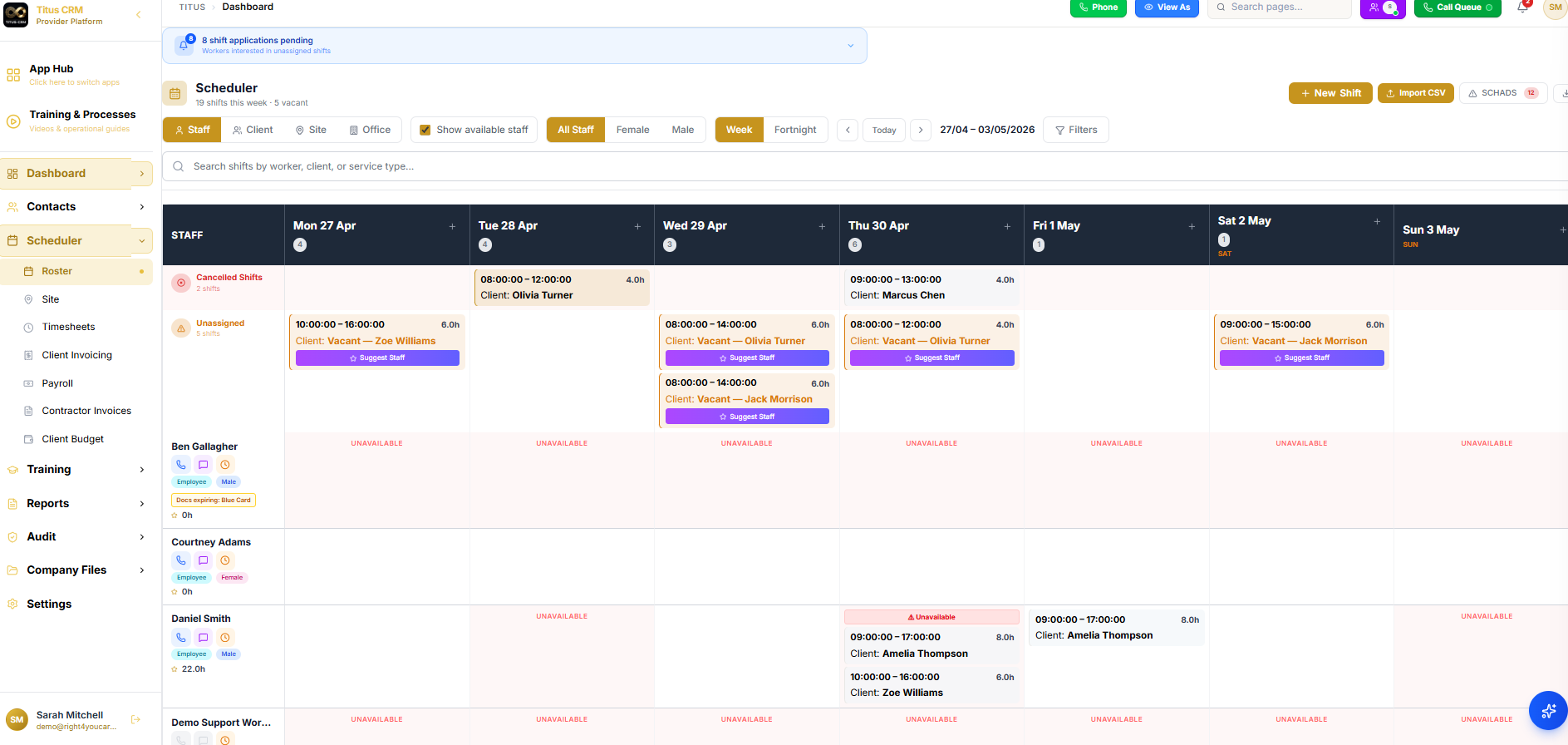
Residential care never stops. Titus rosters sleepovers, overnight shifts, weekend cover, and back-to-back rotations across all your houses — and checks every shift against SCHADS Award rules before it becomes a payroll mistake or a coverage gap.
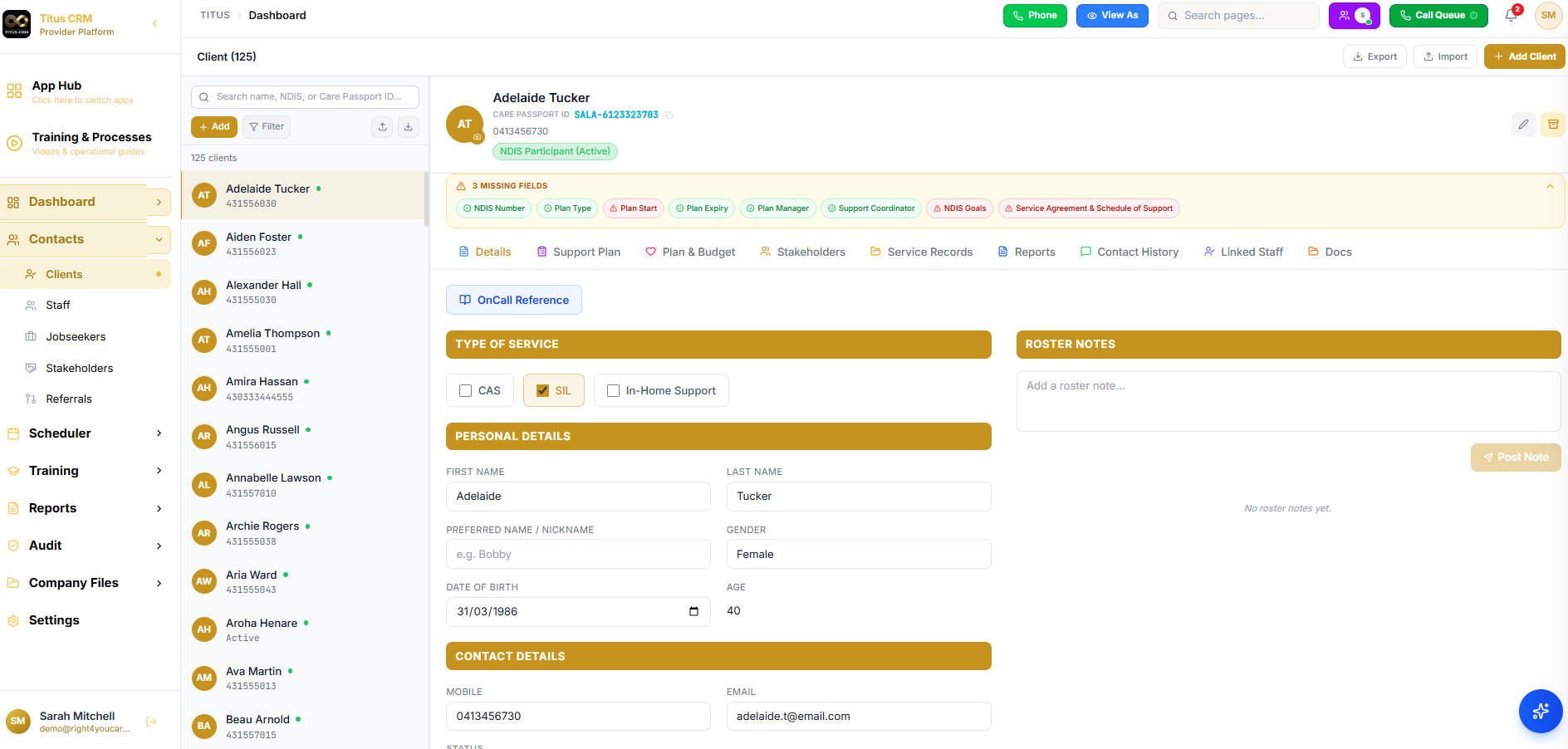
What happened on shift is your evidence base. Titus captures structured shift notes, progress notes, and behaviour logs against each young person's record — so every handover starts with the full picture, and every reviewer finds a complete, timestamped history.
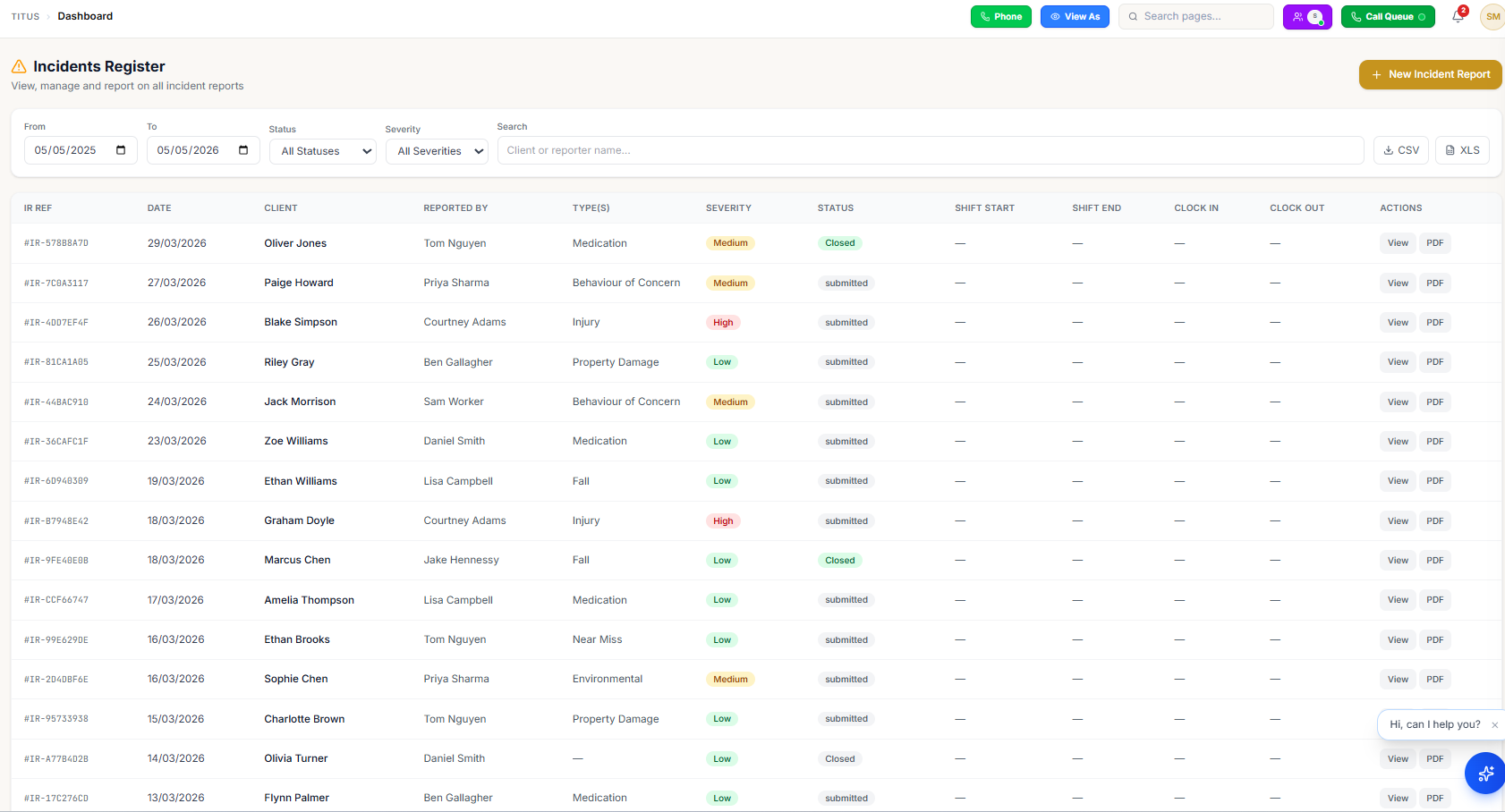
Residential care generates more incidents than almost any other service type. Titus gives you one structured incident register — consistent forms, escalation workflows, and instant exports — built to support your incident-notification and reportable-conduct obligations under your state's OOHC framework.
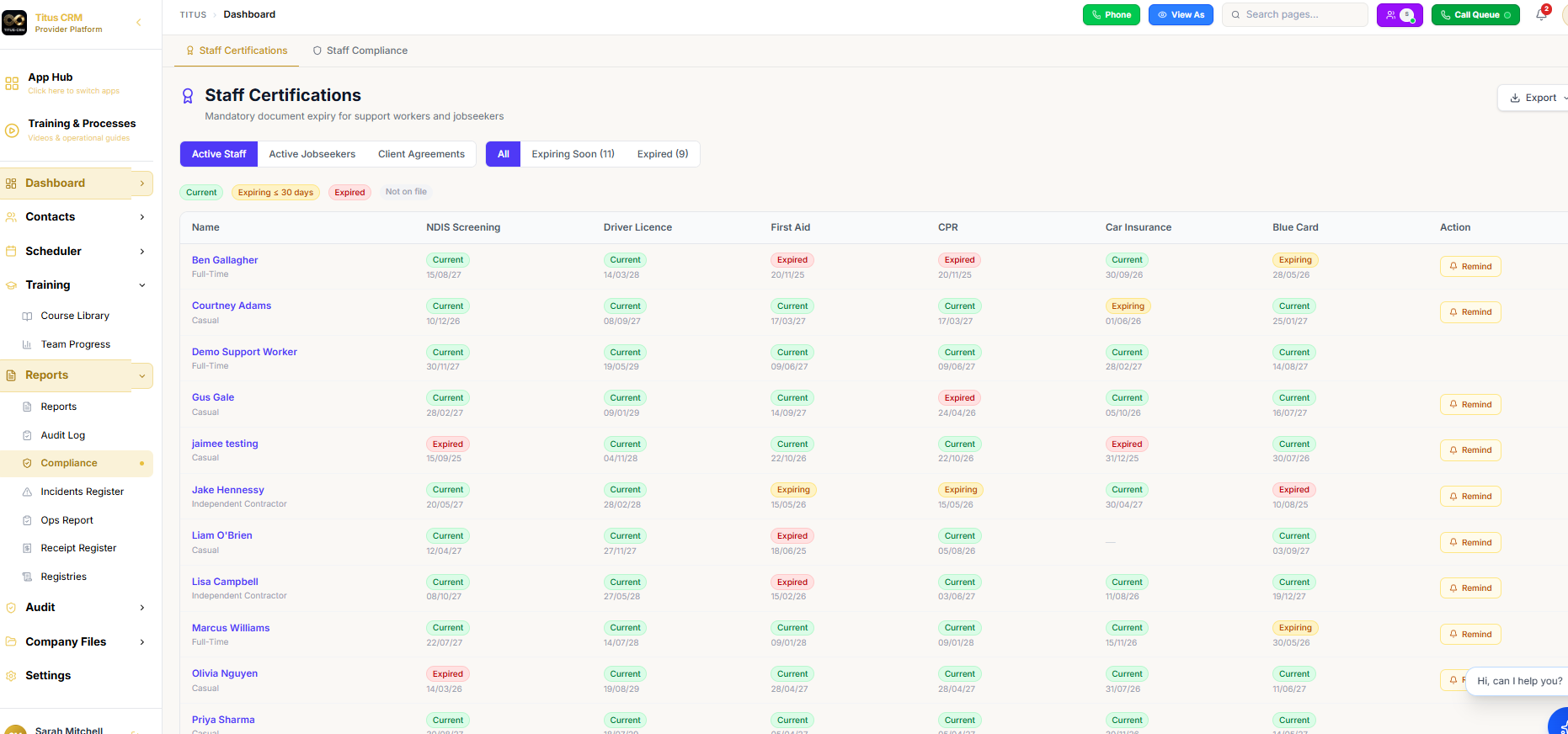
Working with children and young people means zero tolerance for expired clearances. Titus tracks Working with Children Check–type clearances, First Aid, CPR, and any custom certification against every staff member — with colour-coded status and automated alerts well before anything expires.
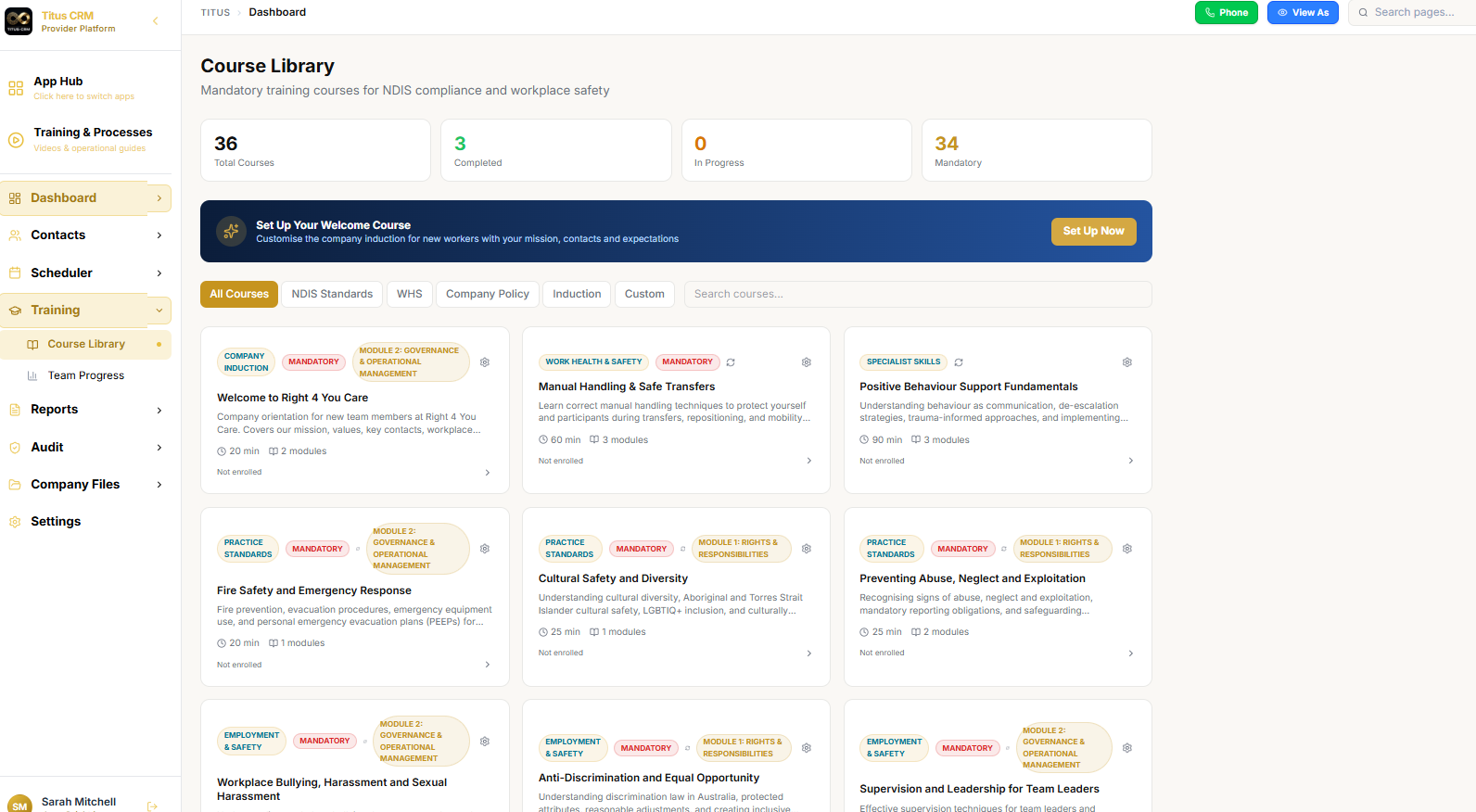
Induction and mandatory training are core to OOHC workforce requirements. The built-in Titus LMS lets you build courses, enrol staff, track completion, and hold the training evidence in the same system as the rest of your workforce records.
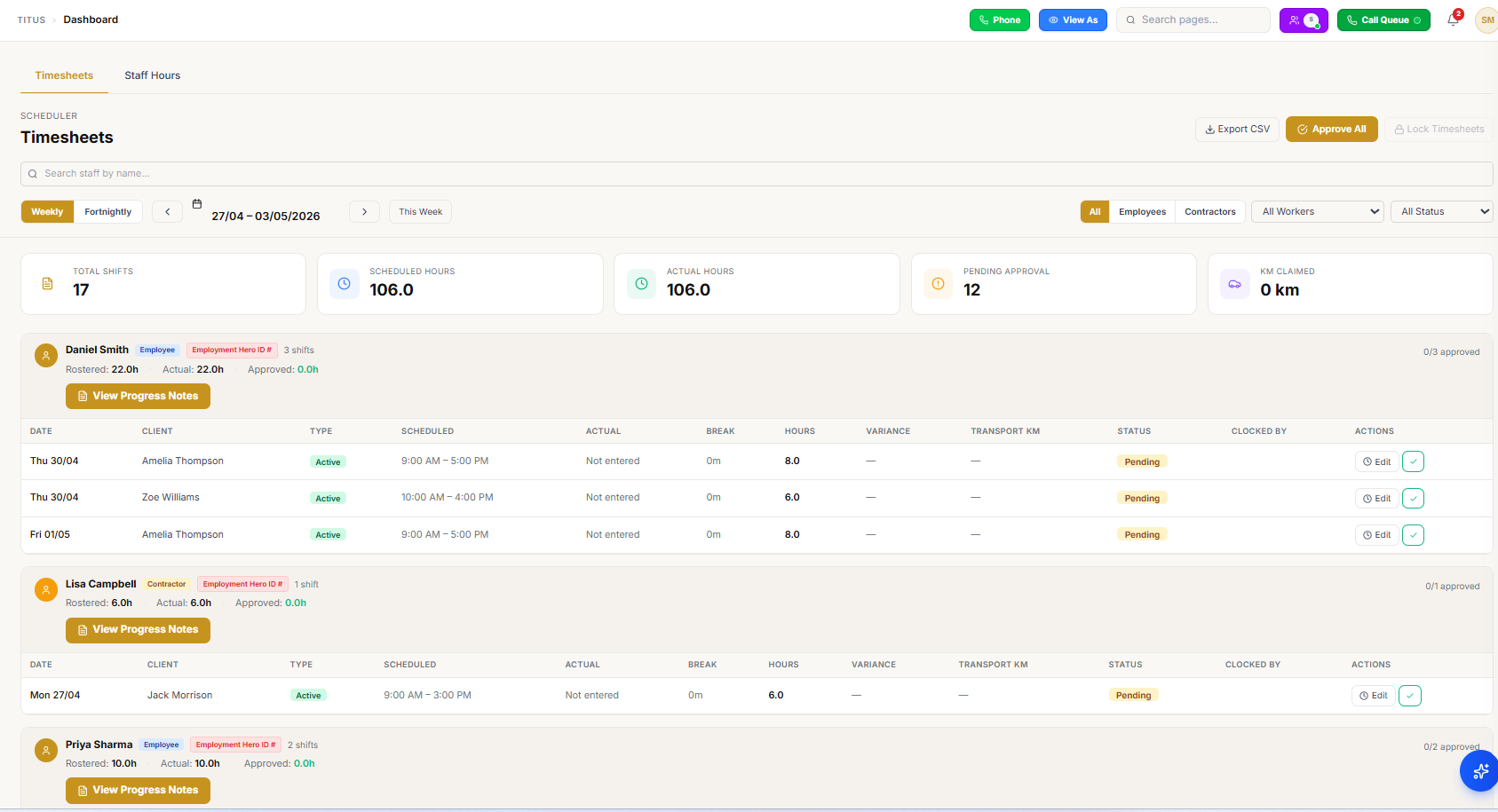
Sleepovers, active nights, broken shifts, weekend penalties — residential care payroll is where money leaks. Titus timesheets flow straight from the roster with SCHADS Award rules applied, so what staff worked is what payroll pays.
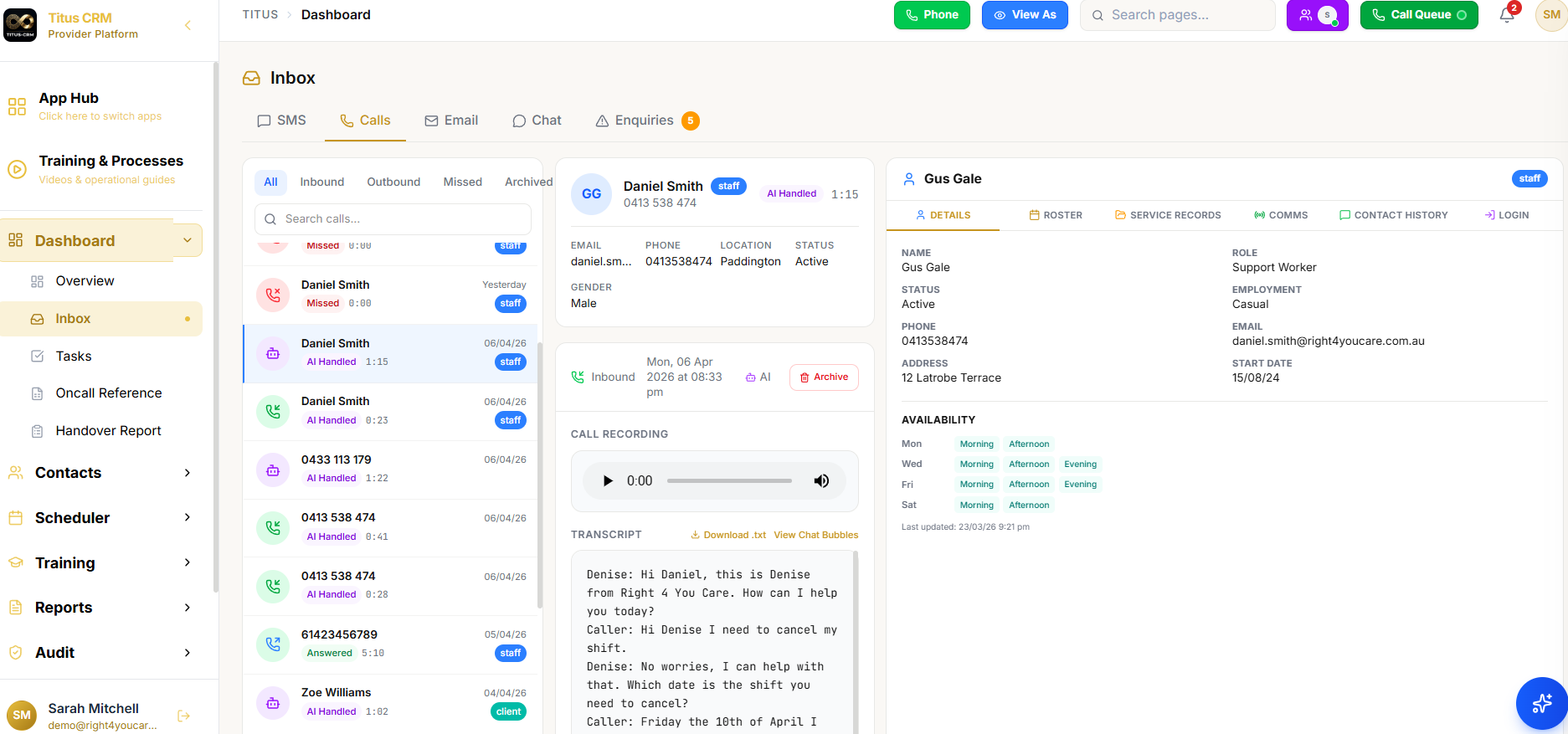
In OOHC the phone doesn't stop at 5pm. Titus brings calls, SMS, email, and chat into one inbox — every call transcribed and summarised by AI, and the Andy AI voice assistant answering when your team can't. The morning shift sees exactly what happened overnight, in writing.
Out of home care is state-regulated, high-stakes work. Titus is built for the organisations doing it.
Running staffed houses around the clock? Titus handles 24/7 rostering with sleepovers, shift notes and handovers, incident records, and staff check tracking across every house — in one platform your whole team works from.
Higher ratios, intensive documentation, behaviour logs, and demanding workforce requirements? Titus keeps structured case records, training evidence, and incident histories that stand up when reviewers look closely.
Supporting young people across residential and community settings? Titus centralises client records, rosters, on-call communication, and mandatory training — with a dedicated youth residential edition built for the intensity of that work.
There's a dedicated Titus page for youth residential care — incident management, behaviour support documentation, 24/7 rostering, and staff screening for high-intensity youth services.
Out of home care is regulated state by state in Australia — for example, in NSW the Office of the Children's Guardian accredits statutory OOHC providers. That accreditation belongs to your organisation and your practice, and no software can hold it for you.
Titus CRM is not accredited, certified, or endorsed by any OOHC regulator. What it does is make the operational side easier to run and easier to evidence: structured incident records, timestamped shift notes and case documentation, staff check and certification tracking, and training records — all in one system, exportable when your accreditation body or case reviewers ask.
The same full OOHC platform, three ways in — whether you're a brand-new youth or residential care provider getting off the ground or ready for a branded platform of your own. Not per user, so your bill never climbs as you staff up your houses.
No credit card required. No lock-in contract. Cancel anytime.
Step up to Rent Titus — up to 300 contacts and 100 clients for $249/week. Same system, more headroom, no renegotiation.
No credit card required. No lock-in contract. Cancel anytime.
Rent you pay in your first 8 weeks comes straight off the price of owning your platform — try it in your real houses, then own it.
30% deposit starts the build · balance on delivery. Add-ons (one-off): AI Brain +$1,499 · Unified Inbox +$1,999 · 24/7 AI Voice Receptionist +$399. Fully loaded (all three add-ons): $10,397 +GST.
What Australian out of home care providers ask before choosing Titus.
Titus CRM is OOHC case management software for Australian out of home care providers — residential care, therapeutic residential care, and youth services. It combines 24/7 rostering for residential houses, shift notes and handover documentation, an incident register, staff screening-check and certification tracking, case notes and client records, AI call transcription with a multi-channel on-call inbox, a built-in LMS for mandatory training, and SCHADS-compliant timesheets in one platform.
Titus CRM gives you three ways in. Rent it as one flat weekly fee — Startup Rent is $169/week for up to 100 contacts and 50 clients, and Rent Titus is $249/week for up to 300 contacts and 100 clients. Or own it outright with a one-off branded build from $6,500, delivered in 30 days with no subscription. Every option includes the full platform. There is a 21-day free trial on the rent tiers, no credit card required, and no lock-in contract. Because pricing is not per user, your bill does not climb as you hire more residential staff.
Yes. Titus CRM is residential care rostering software built for Australian 24/7 operations. You can roster sleepover shifts, overnight and weekend cover, and back-to-back rotations across multiple houses, with every shift checked in real time against SCHADS Award rules — sleepover provisions, minimum engagement, overtime, and penalty rates — before it becomes a payroll or compliance problem.
Yes. Titus CRM tracks Working with Children Check–type clearances, First Aid, CPR, and any custom certification as trackable credentials against each staff member, with colour-coded status and automated expiry alerts before renewals are due. Checks are recorded and monitored inside Titus; verification with the issuing state body remains your responsibility as the provider.
Yes. Titus CRM includes a structured incident register that captures incident details in consistent, searchable records linked to clients, staff, and locations, with escalation workflows and instant export for reviewers. It is built to support your incident-notification and reportable-conduct obligations under your state's OOHC framework — you stay in control of what gets reported to your regulator and when.
No — and no software is. OOHC accreditation applies to providers, not to software platforms. Out of home care is state-regulated in Australia (for example, the NSW Office of the Children's Guardian accredits statutory OOHC providers in NSW). Titus CRM is not accredited, certified, or endorsed by any regulator. It is built to support accredited providers with structured records, incident documentation, staff check tracking, and training records that make evidencing your practice easier.
Yes. Titus CRM is youth residential care software as well as a platform for broader OOHC services. It handles the intensity of youth and therapeutic residential care — high incident volumes, 24/7 staffing with sleepovers, strict staff screening requirements, and after-hours family contact. See the dedicated Titus for Youth Residential page for detail.
Book a free 30-minute demo focused on your houses — rostering, shift notes, incidents, staff checks, and the on-call inbox.